DCB Newsletter #2/26: IT’S A WRAP! A Recap of The Insulin Insight Conference 2026
DCB Newsletter #2/26: IT’S A WRAP! A Recap of The Insulin Insight Conference 2026
Dear Community,
The Insulin Insight Conference 2026 recently took place at sitem-insel AG in Bern. It brought together leading minds across the insulin ecosystem to explore pioneering science, clinical practice, and real-world challenges. Some of you could not join us, unfortunately. But no worries, we got you covered! The ultimate, unmissable roundup can be found below.
“We organized the Insulin Insight Conference to give insulin the visibility and place it deserves.”
– Maren Schinz, Beyond Diagnostics
The Biology of Insulin: Basics & Breakthroughs
José Garcia-Tirado, University of Bern and DCB, opened the conference by highlighting that real-world glycemic outcomes often fall short of targets, persistently across age groups, diabetes duration, and treatment types. Adjunctive therapies to insulin could help to achieve full metabolic control. The AID-JUNCT study, led by José and his team, is exploring this very topic: Improving glycemic control in PwT1D on adjuvant GIP/GLP-1RA alongside AIDs. For more details, contact AID-Junct@spital.so.ch
The INSPIRE Lab at DCB, Stefanie Dobitz and Danai C. Kokona, explored how real-world conditions impact the biological activity of insulin. Using cell and in vivo studies, the team was able to show how temperature and mechanical stress effect the ability of insulin to lower blood glucose levels. A sneak peak into preliminary results from anonymized, donated real-world insulin samples confirmed the negative impact of environmental stress.
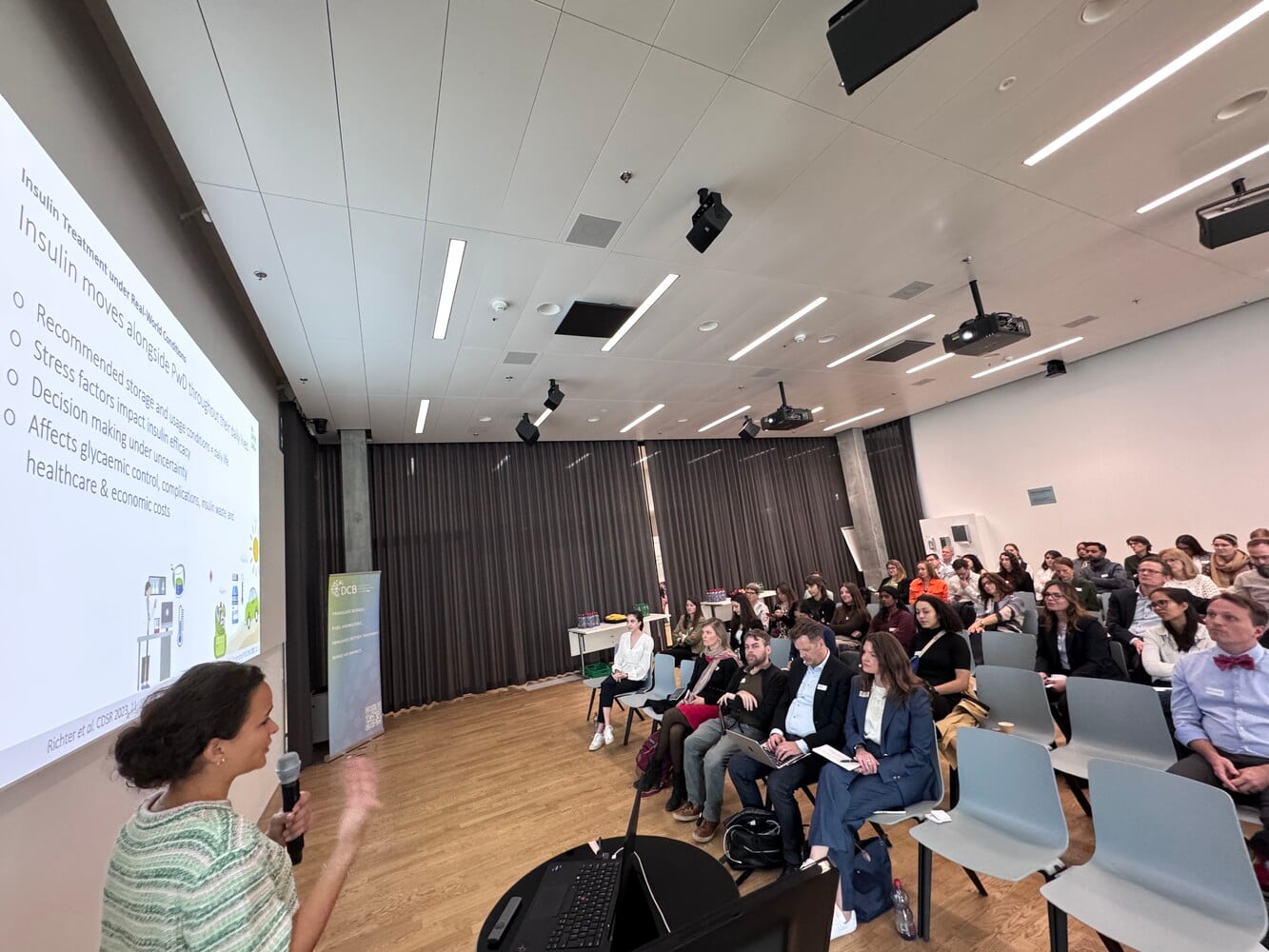
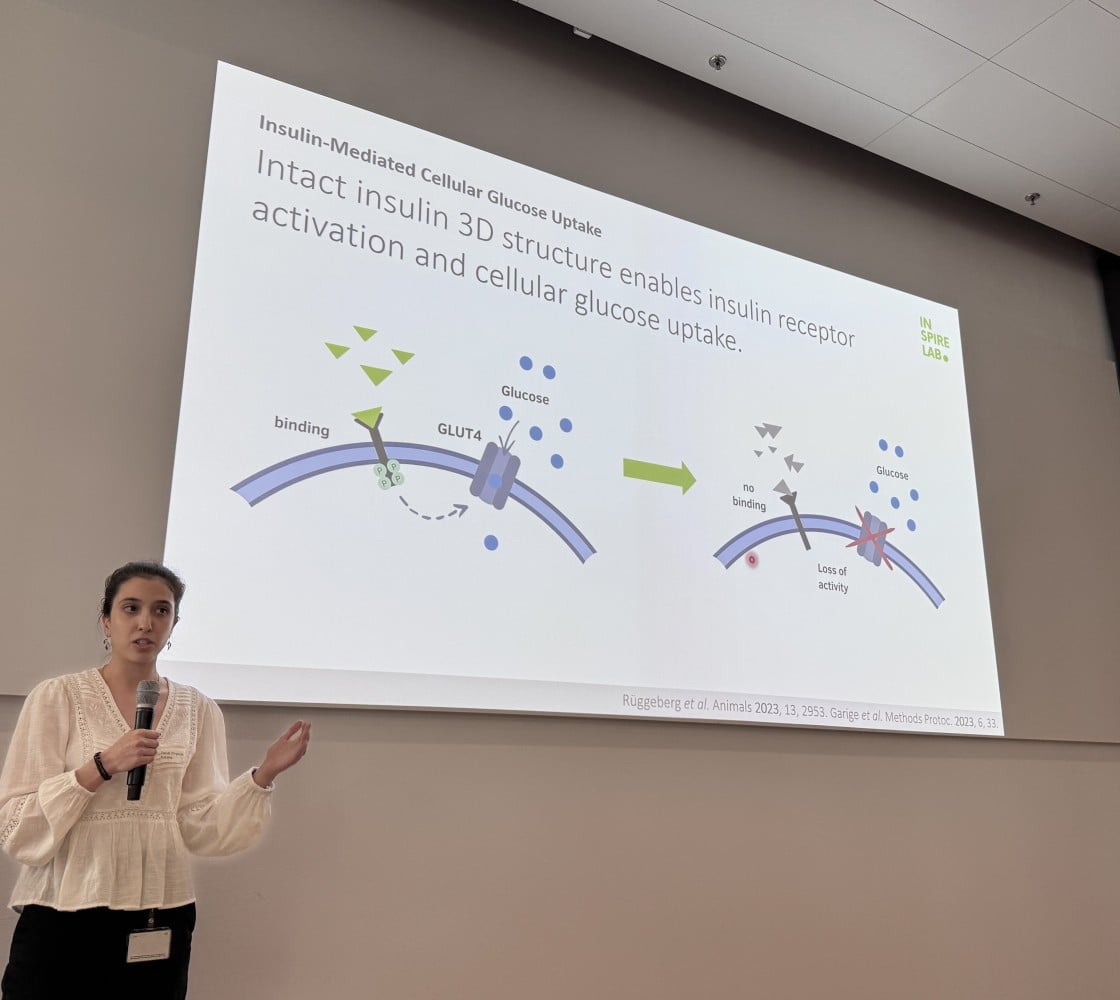
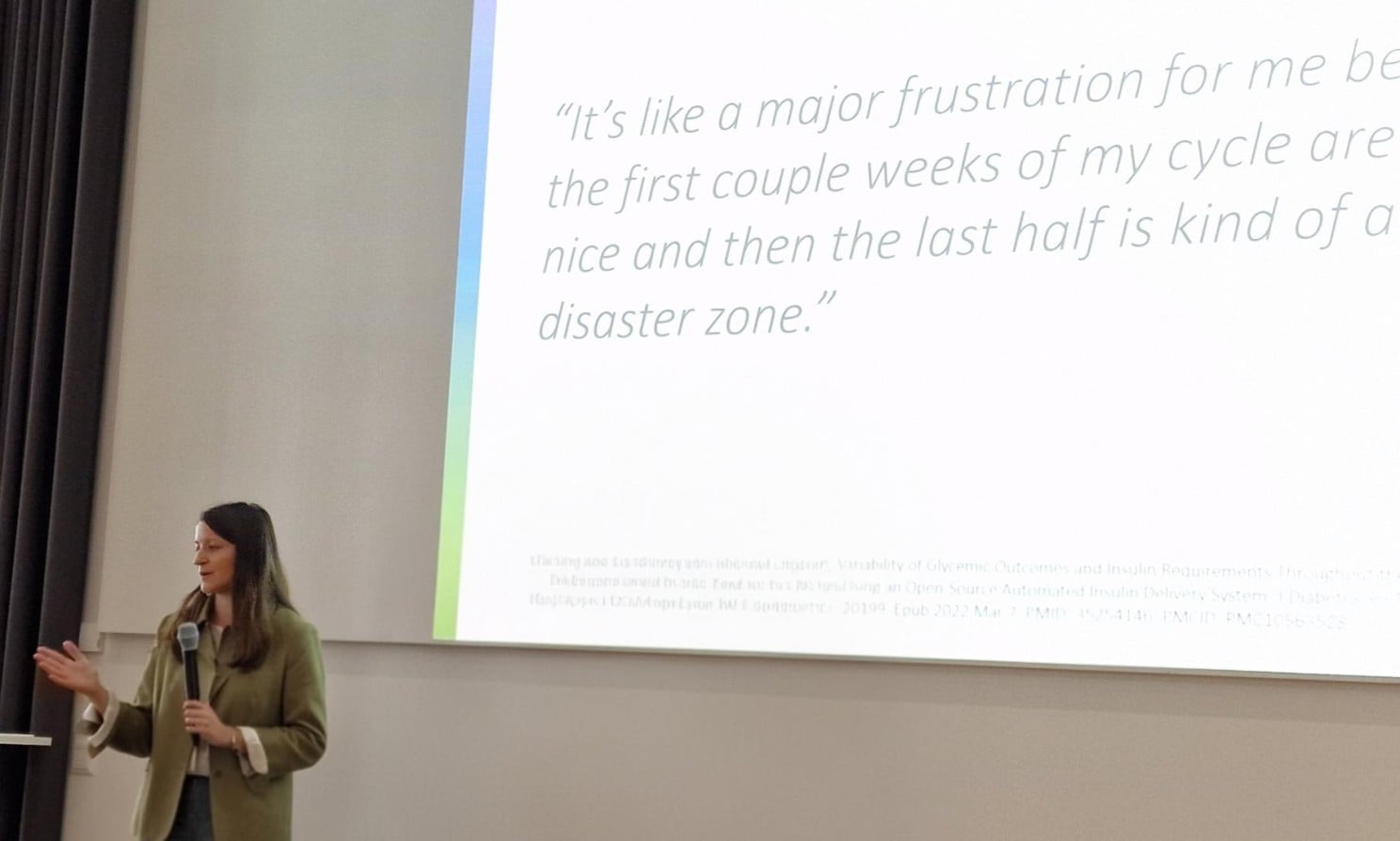
The conference`s biology of insulin session concluded with Martina Rothenbühler, DCB, who discussed how premenopausal women with T1D often experience changes in blood glucose levels related to their menstrual cycle. These natural hormone fluctuations can complicate diabetes management, as current AID systems do not account for them. The TIMES study, conducted by DCB, aims to provide scientific insights into how insulin needs and blood glucose levels evolve during the menstrual cycle. For more details, contact times@dcberne.com
The Real-World Perspective
After lunch, James Elliott from VIA Diabetes energized the audience with a powerful reminder: Insulin is still out of reach for many and still too expensive for many more, leaving PwD to die needlessly. The insulin crisis is undeniably complex, but VIA Diabetes is taking action. Their approach? Putting PwD at the heart of decision-making and amplifying diabetes awareness across all relevant sectors and stakeholders. By ensuring those directly affected have a seat at the table, they pursue real, impactful change.
Jessica Zafra Tanaka, University of Geneva, engaged with the audience to take a systems view on insulin access. Systems are complex and range from research, development, and manufacturing of a medication all the way to its prescription and use. Jessica highlighted the struggles of global insulin access due to multiple barriers at global and national level. To encourage: acciss, the NCD Policy Lab, and the T1D Commission all work on addressing specific challenges – From documenting global barriers to insulin access, to pooled procurement and regulations, all the way to delivery of care and social aspects.
“The future is now.”
Christa Cepuch, Brigham and Women`s Hospital
Christa Cepuch from Brigham and Women’s Hospital shared a powerful message: innovation and access must work together. Today, standards of care vary significantly between countries and strongly depend on locally available resources. While progress is being made, we must ask: How can we create lasting, systemic change? The future of diabetes care is about fairness. Global impact must be a priority from the very beginning of research and development, not an afterthought.
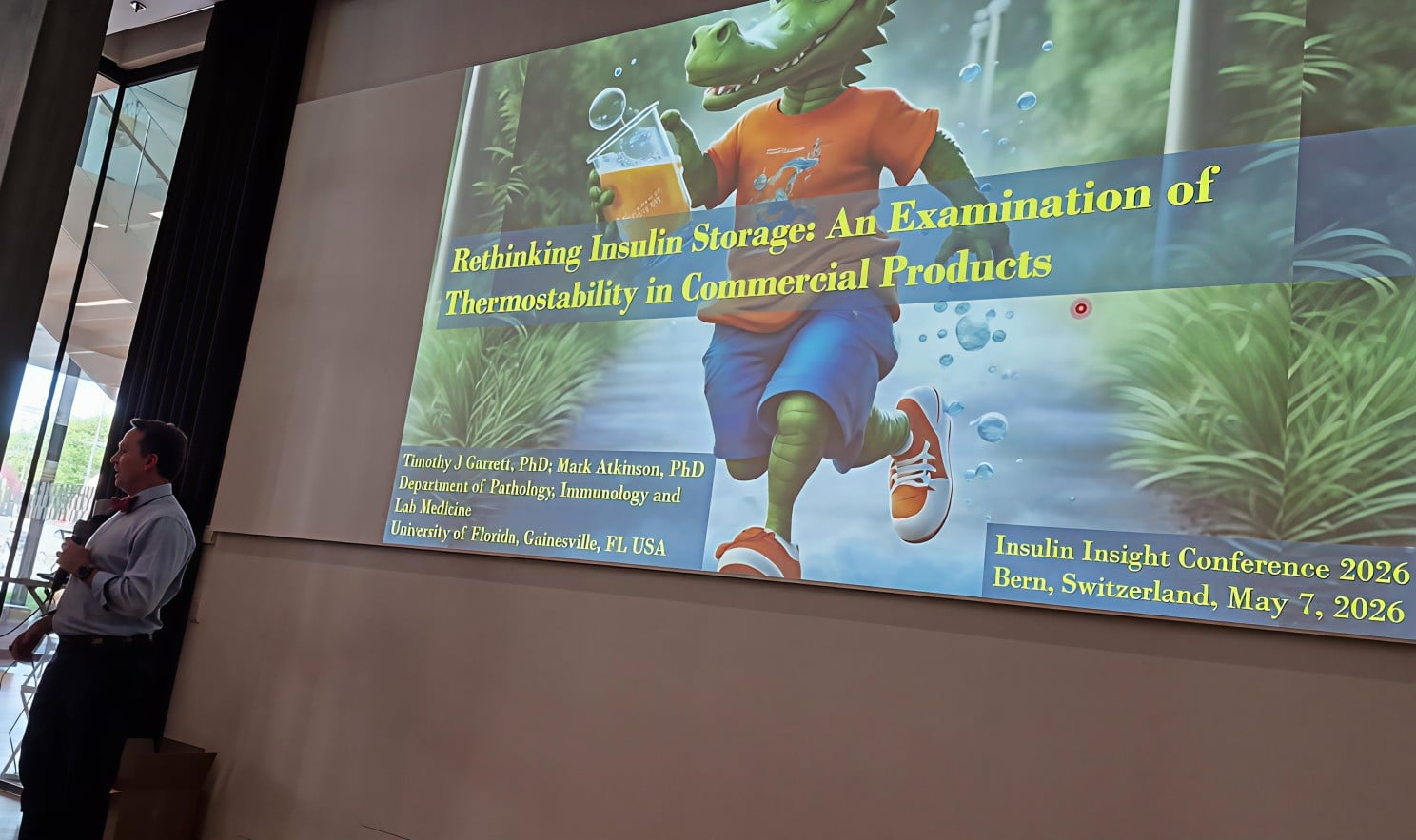
This session wrapped up with a presentation from Timothy J. Garrett, University of Florida, who challenged us to rethink how we store insulin. Potency tells us how much insulin is in your pen or vial, while bioidentity shows how effectively it lowers blood glucose (i.e. its efficacy). The good news? Insulin – Whether mailed from US pharmacies, stored in clay pots, or even briefly exposed to high temperatures – keeps its potency. The catch: We measure potency, not bioidentity. Without testing how well insulin actually works in the body, we might be missing a critical piece of the puzzle.
The Future
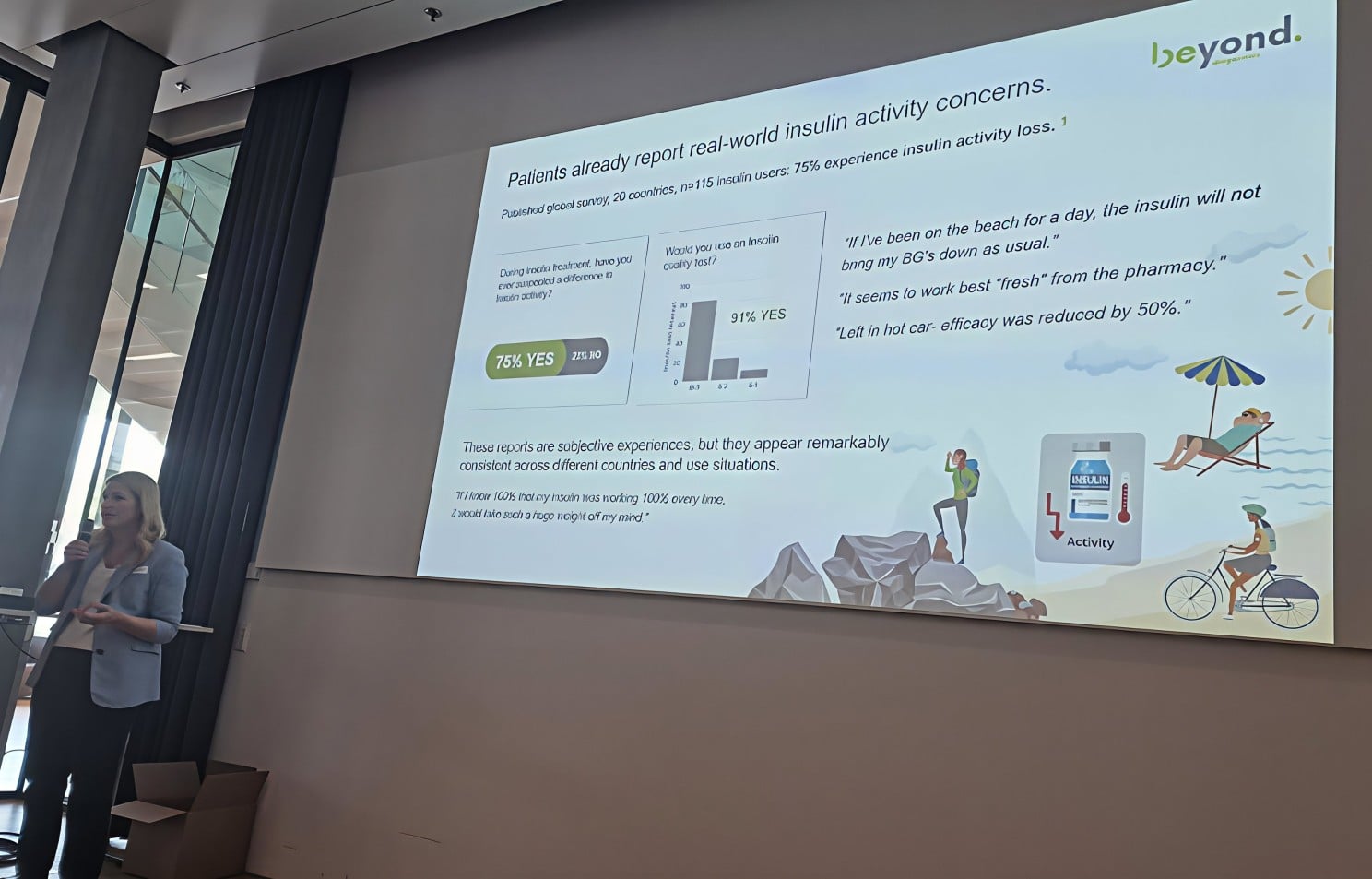
After a re-energizing coffee break Maren Schinz from Beyond Diagnostics presented LUMIQ: A test to determine insulin efficacy at the point of care. Current solution such as temperature sensors or cooling pouches allow to monitor and maintain the temperature of insulin. However, temperature does not equal efficacy. Using LUMIQ, it is possible to determine how effective your insulin medication is in real-time, reducing treatment uncertainty – Is my medication working properly? – and improving clinical outcomes.
Last but for sure not least Ulrike Menkes from Alva Innovations highlighted the dual role of insulin preservatives. While preservatives support insulin formulation stability, they also act as potential inflammation promoters compromising insulin delivery. With their In Line Just-In-Time Insulin Infusion Filter, Alva Innovations prolongs the lifespan of pump sets and helps maintain healthy skin.
“If you do an innovation, you accept challenges, and you need to be bold.”
Ulrike Menkes, Alva Innovations
Looking Forward
At the networking reception everyone agreed: The Insulin Insight Conference 2026 was a huge success! Inspiring talks, a diverse audience, and a collaborative atmosphere made this day one to remember. Fresh scientific insights, practical knowledge, and a cross-disciplinary dialogue-built connections to shape the future of insulin management, reinforcing its essential role in diabetes care.
Let’s keep the conversation going! Share your biggest takeaway, a challenge you’re facing, or a wish for the future in the comments below. How can we turn these insights into action? What should we explore next? Looking to collaborate? Reach out to us, contact maren.schinz@dcberne.com and stefanie.dobitz@dcberne.com.
This post was previously published in Linkedin. Click here to see the original publication.


DCB Research AG
Freiburgstrasse 3
3010 Bern
Schweiz