New endowed lectureship investigates the role of the gut microbiome in obesity and diabetes
Thanks to the support of the Diabetes Center Berne (DCB), the University of Bern is establishing a new endowed lectureship at the Institute of Infectious Diseases (IFIK). Its aim is to investigate the role of the gut microbiome in metabolic diseases such as obesity, diabetes and related diseases and to develop new approaches to prevention and treatment. The lectureship is held by Prof. Dr. Maria Luisa Balmer.
Metabolic diseases such as obesity and type 2 diabetes have become one of the greatest global medical and social challenges in recent decades. Today, almost half a billion people worldwide live with diabetes – around a third of them are over 65 years old, but children and young people are also increasingly affected. By 2045, this figure is expected to rise further and reach well over 600 million people with the disease. The gut microbiota – i.e. the entirety of microorganisms in the gut – influences the metabolism and the immune system in a variety of ways. Disruptions in this delicate balance are considered a key factor in the development of obesity, type 2 diabetes and related metabolic diseases in humans.
A newly created lectureship will investigate the details of these interactions between metabolism and the immune system, as well as the mechanisms that could be used to develop new microbiome-based strategies for preventing and treating overweight and obesity. “The new endowed lectureship will strengthen a key future field of medicine, securing its place at our university in the long term,” says Virginia Richter, Rector of the University of Bern. Stephen Leib, Professor of Clinical Microbiology and Director of the Institute of Infectious Diseases (IFIK) at the University of Bern, where the endowed lectureship will be based, adds: “By integrating insights from basic research and clinical practice, new approaches to tackling obesity and diabetes can be developed. This could make a tangible contribution to addressing one of the most urgent health challenges of our time.”
Research at the interface of microbiota, immunology and metabolism
At the heart of the twelve-year lectureship, which is endowed with around five million Swiss francs, is research into immunometabolism – a relatively new field that investigates the interactions between metabolic processes and the immune system. A central working hypothesis is that in obesity and diabetes, certain metabolic products of the intestinal microbiome trigger or intensify persistent, mild inflammatory processes in the body, that are involved in the regulation of body weight. Conversely, other microbial metabolites appear to protect against such inflammatory responses.
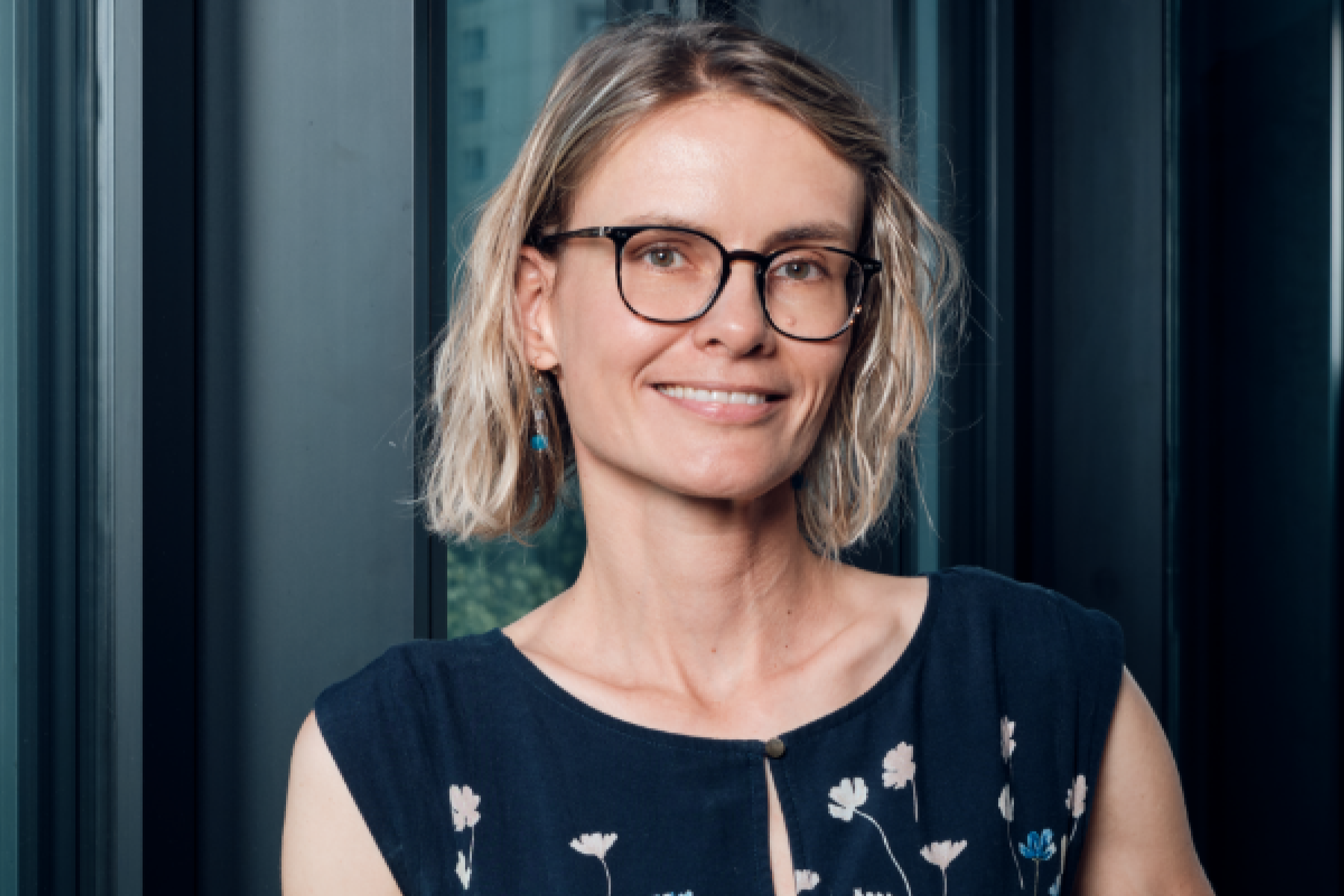
The new endowed lectureship will be held by Prof. Dr. Maria Luisa Balmer. Balmer is SNSF-Excellenza Assistant Professor and research group leader of the Translational Immunometabolism Lab at the Institute of Infectious Diseases at the University of Bern. In her research, she investigates which microorganisms have a protective effect against such inflammatory reactions and could, in a sense, be harnessed as the body’s own means of regulating weight. The aim is to establish a scientific basis for innovative strategies to prevent and treat these major diseases.
Balmer combines innovative experimental systems – such as germ-free mouse models, i.e. mice that are raised entirely without microorganisms, including gut bacteria – with state-of-the-art multi-omics approaches and clinical studies in patients with obesity and diabetes. Multi-omics approaches integrate data at the gene, protein and metabolite levels to obtain the most comprehensive possible picture of the underlying biological processes. This makes it possible to first identify mechanisms of interaction between the gut microbiome and its host, as well as potentially beneficial metabolites, in the mouse model and then test their relevance directly in patients.
“The endowed lectureship allows us to systematically decipher the functional role of individual microorganisms and their metabolic products and translate them more quickly into clinical application,” says Leib. Balmer adds: “I am delighted that the new endowed lectureship will enable us to complement the IFIK’s existing strong profile in infection research by systematically investigating how beneficial gut bacteria and their metabolic products could protect against obesity and diabetes.”
Contribution to prevention, therapy and personalized medicine
The establishment of the endowed lectureship is made possible thanks to the financial support of the Diabetes Center Berne (DCB) – a private, independent Swiss foundation established in 2017 by entrepreneur Willy Michel with the aim of making life with diabetes easier. Derek Brandt, CEO of the Diabetes Center Berne, emphasizes: “Metabolic diseases such as obesity and diabetes are among the most common and cost-intensive diseases of our time. It is crucial for us that new scientific findings are translated into concrete approaches for prevention and treatment as quickly as possible. A better understanding of the gut microbiome opens up promising new possibilities here.”
The endowed lectureship should therefore help to close an existing gap between classical infection research and metabolic medicine and promote new interdisciplinary collaborations within the Faculty of Medicine. “This field of research is already well established at the University of Bern. With the endowed lectureship, we want to make a targeted contribution to developing promising approaches more quickly towards application – especially where new findings can specifically improve diabetes management,” says Brandt. In particular, new microbiota-based prevention and therapy approaches against obesity and its secondary diseases, a deepening of interdisciplinary cooperation within the university and with external partners as well as impulses for personalized medicine, for example through the use of microbial biomarkers for individual risk assessment, are expected.
Downloads
Contact:
Media Relations
University of Bern
Tel: +41 31 684 41 42
E-mail: medien@unibe.ch
Diabetes Center Berne
E-mail : medien@dcberne.com
|
About Maria Luisa Balmer Prof. Dr. med. Maria Luisa Balmer is an immunologist and physician and heads the Translational Immunometabolism Lab at the Institute for Infectious Diseases at the University of Bern. Her research investigates how the gut microbiota, metabolism and immune system interact and contribute to the development of common diseases such as obesity and diabetes. She has been awarded an SNSF Eccellenza Professorial Fellowship and various other national and international grants for her excellent research. in 2023, Balmer also received the Marie Heim-Vögtlin Prize for outstanding young female researchers. More information: https://www.ifik.unibe.ch/forschung/translational_immunometabolism___trim_lab___maria_balmer/index_ger.html |
|
Institute for Infectious Diseases (IFIK) The Institute of Infectious Diseases (IFIK) is part of the Faculty of Medicine of the University of Bern and combines the entire spectrum of clinical microbiology in teaching, research and diagnostic services in the fields of virology, bacteriology, mycology, parasitology and immunological infection analysis. The IFIK is home to the Biosafety Center, which supports research with highly pathogenic microorganisms and is designated as a “WHO Collaborating Center for Biosafety and Biosecurity”. The IFIK performs national health care tasks within the framework of mandates from the Federal Office of Public Health (FOPH) as the National Reference Center for Pneumococci (NZPn) and the National Center for Antibiotic Resistance (anresis.ch). More information: https://www.ifik.unibe.ch/ |
|
Diabetes Center Berne (DCB) The Diabetes Center Berne (DCB) is a private, independent Swiss foundation established in 2017 with the aim of making life with diabetes easier. The DCB supports ideas and projects in the field of diabetes technology worldwide by providing expertise, access to clinical research facilities and its own laboratories, as well as financial resources. The aim is to work in partnership to bring them a big step closer to market maturity. The work of the DCB is not profit-oriented – the goal is new insights and innovations in diabetes management as well as a vibrant community. More information: https://www.dcberne.com/de/ |
More recent news
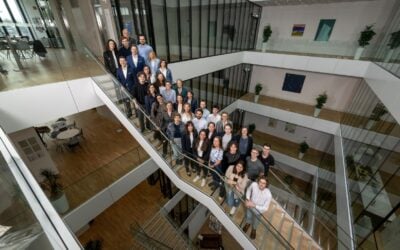
Four DCB professorships advance research in diabetes technology
32 publications, 37 conference contributions and over CHF 6 million in research funding: the four professorships at...

SNAQ Launches the First AI Nutritionist for CGM Users Managing Diabetes
SNAQ has announced the release of its AI Nutritionist, a first-of-its-kind digital companion designed to help people...
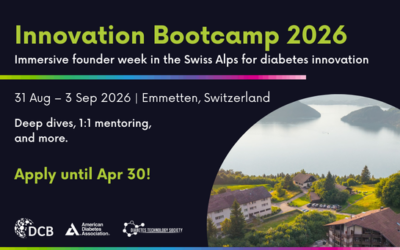
DCB Innovation Bootcamp 2026 | Apply now!
31 Aug – 3 Sep · Emmetten, SwitzerlandAn immersive accelerator for diabetes technology founders in the Swiss AlpsWhy...


DCB Research AG
Freiburgstrasse 3
3010 Bern
Schweiz