Our research

From idea to implementation: DCB supports and funds project activities and innovations with partners and researchers that are blazing new trails in the area of diabetes.


Publications

2025

Performance of Three Continuous Glucose Monitoring Systems in Adults With Type 1 Diabetes

Eichenlaub et al.

Abstract
The performance of continuous glucose monitoring (CGM) systems is difficult to compare due to different study designs and a lack of head-to-head studies. This study evaluated the performance of FreeStyle Libre 3 (FL3), Dexcom G7 (DG7), and Medtronic Simplera (MSP) against different comparator methods and during clinically relevant glycemic scenarios.

Feasibility of a Glucose Manipulation Procedure for the Standardized Performance Evaluation of Continuous Glucose Monitoring Systems

Link et al.

Abstract
In continuous glucose monitoring (CGM) system performance studies, it is common to implement specific procedures for manipulating the participantsโ€™ blood glucose (BG) levels during the collection of comparator BG measurements. Recently, such a procedure was proposed by a group of experts, and this study assessed its ability to produce combinations of BG levels and rates of change (RoCs) with certain characteristics.

A prospective pilot study demonstrating non-invasive calibration-free glucose measurement

Rothenbรผhler et al.

Abstract
Glucose is an essential molecule in energy metabolism. Dysregulated glucose metabolism, the defining feature of diabetes, requires active monitoring to prevent significant morbidity and mortality. Current technologies for intermittent and continuous glucose measurement are invasive. Non-invasive glucose measurement would eliminate this barrier towards making glucose monitoring more accessible, extending the benefits from people living with diabetes to prediabetes and the healthy. We developed and investigated a spectroscopy-based system for measuring glucose non-invasively and without per-person calibration.

Toward Detection of Nocturnal Hypoglycemia in People With Diabetes Using Consumer-Grade Smartwatches and a Machine Learning Approach

Mendez et al.

Abstract
Nocturnal hypoglycemia poses significant risks to individuals with insulin-treated diabetes, impacting health and quality of life. Although continuous glucose monitoring (CGM) systems reduce these risks, their poor accuracy at low glucose levels, high cost, and availability limit their use. This study examined physiological biomarkers associated with nocturnal hypoglycemia and evaluated the use of machine learning (ML) to detect hypoglycemia during nighttime sleep using data from consumer-grade smartwatches.

Cost-Effective Quality of Life Improvement While Reducing Health Care Professional Burnout With an AI-Driven Intervention for Personalized Medicine

Kelly et al.

Abstract
Burnout affects >50% of physicians and nurses. Spotlight-AQ is a personalized digital health platform designed to improve routine diabetes visits. We assessed cost-effectiveness, visit length, and association with health care professional (HCP) burnout.

A Comparative Analysis of Glycemic Metrics Derived From Three Continuous Glucose Monitoring Systems

Freckmann et al.

Abstract
This study analyzed the differences in continuous glucose monitoring (CGM)-derived metrics among three current-generation systems and evaluated their impact on therapeutic decision-making.

One Size Does Not Fit All: The Need for Sex-Specific Precision Medicine in Diabetes Technology

Hossmann et al.

Abstract
Incorporating sex-specific factors in diabetes research and treatment is essential for advancing precision medicine. There are critical gaps in understanding and applying sex-related differences. Female-specific diabetes pathophysiology manifests in three major areas: life cycle phases (including puberty, pregnancy, and menopause), lifestyle factors (such as responses to nutrition and physical activity), and insulin pharmacology. These elements significantly affect insulin sensitivity and glycemic control in women, yet are frequently underrepresented or ignored in both research and clinical practice. Greater research and clinical focus across these domains is needed to better understand and address sex-based differences in diabetes. Identifying and filling evidence gaps will support more systematic and effective care.

Rahmenbedingungen der kรผnstlichen Intelligenz in der Diabetologie

Hossmann et al.

Abstract
Der Einsatz von KI (kรผnstliche Intelligenz) in der Diabetologie ist an komplexe rechtliche, regulatorische und ethische Rahmenbedingungen gebunden. Im europรคischen Kontext sind dabei die Medizinprodukte- (MDR) und die KI-Verordnung besonders wichtig, ergรคnzt durch internationale Normen, nationale Gesetze und Datenschutzvorgaben wie die Datenschutz-Grundverordnung (DSGVO). Fรผr eine verantwortungsvolle Implementierung sind zudem ethische Leitlinien, wissenschaftliche Positionspapiere sowie die Perspektiven der Nutzer:innen zentral.

Discrepancies between current displayed and auto-logged glucose values in FreeStyle Libre 3: Implications for clinical interpretation

Witthauer PhD et al.

Abstract
The FreeStyle Libre 3 (FSL3) continuous glucose monitoring (CGM) system provides both auto-logged glucose values (AL) and current displayed glucose values (CUR). These values are often assumed to be interchangeable; however, discrepancies and their clinical relevance remain underexplored.

A digital twin-enhanced decision support system improves time-in-range in type 1 diabetes: a randomized clinical trial

Builes-Montaรฑo et al.

Abstract
Most individuals with type 1 diabetes (T1D) worldwide continue to be managed with multiple daily injections or sensor-augmented pumps. Decision-support systems (DSSs) have emerged as cost-effective tools to enhance treatment adherence and glucose control. We conducted a randomized, open-label, parallel-group study to evaluate STUDIA, a DSS incorporating a digital twin-enabled simulation-assisted bolus calculator. Twenty-eight participants with T1D used either the simulation-assisted calculator or traditional carbohydrate counting for prandial insulin dosing, with glucose monitored using Freestyle Libre.

Clinical assessment and acceptance criteria for continuous glucose monitoring (CGM) system performance: A proposed guideline by the IFCC Working Group on CGM

Pleus et al.

Abstract
Continuous glucose monitoring (CGM) systems are essential tools for modern diabetes care. However, the assessment of their analytical performance has been hindered by a lack of standardization. This poses challenges for the field, as the choice of study procedures and evaluation methods can influence the observed performance, further complicating the comparisons between CGM systems and confounding the interpretation and use of CGM metrics as research outcomes. To address this issue, the Working Group on CGM of the International Federation of Clinical Chemistry and Laboratory Medicine (IFCC) has developed a comprehensive guideline for the clinical assessment of CGM systems. The guideline defines requirements for study design and procedures, characteristics of comparator measurements, minimum requirements for accuracy, and performance characterization.

2024

Patientenperspektive auf moderne Diabetestechnologien

Roos et al.

Abstract
The treatment of diabetes has changed fundamentally, with patients now actively involved in their self-management. Digitalization plays a central role in this, from glucose measurement to automated insulin delivery. These offer not only informative but also motivational benefits for those affected. Online communities, influencers, and apps promote exchange and support diabetes self-management. Social media plays an important role in the exchange of information and experiences. Those affected can share their thoughts, experiences, and emotions, which leads to increased self-efficacy and motivation. The increasing importance of the patient perspective is reflected in studies that consider person-reported outcomes (PROs) such as quality of life and diabetes distress.

The Diabetes Technology Society Error Grid and Trend Accuracy Matrix for Glucose Monitors

Klonoff et al.

Abstract
An error grid compares measured versus reference glucose concentrations to assign clinical risk values to observed errors. Widely used error grids for blood glucose monitors (BGMs) have limited value because they do not also reflect clinical accuracy of continuous glucose monitors (CGMs).

Sex-specific differences in physiological parameters related to SARS-CoV-2 infections among a national cohort (COVI-GAPP study)

Grossmann et al.

Abstract
Considering sex as a biological variable in modern digital health solutions, we investigated sex-specific differences in the trajectory of four physiological parameters across a COVID-19 infection.

Pitfalls and Challenges for Diabetes Technology Start-Ups

Brandt et al.

Abstract
When dealing with start-ups, you keep seeing the same โ€œmistakes,โ€ especially those that do not know how to develop a medical device and document it accordingly. The topic of ISO 13485:2016 and/or FDA 21 CFR Part 820 is often not known; however, it is not that difficult if one understands the logic behind it.

Detection of hypoglycaemia in type 1 diabetes through breath volatile organic compound profiling using gas chromatography-ion mobility spectrometry

Nicolier et al.

Abstract
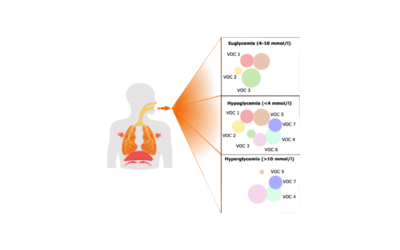
To evaluate the relationship between breath volatile organic compounds (VOCs) and glycaemic states in individuals with type 1 diabetes (T1D), focusing on identifying specific VOCs as biomarkers for hypoglycaemia to offer a non-invasive diabetes-monitoring method.

Comparator Data Characteristics and Testing Procedures for the Clinical Performance Evaluation of Continuous Glucose Monitoring Systems

Eichenlaub et al.

Abstract
Comparing the performance of different continuous glucose monitoring (CGM) systems is challenging due to the lack of comprehensive guidelines for clinical study design. In particular, the absence of concise requirements for the distribution of comparator (reference) blood glucose (BG) concentrations and their rate of change (RoC) that are used to evaluate CGM performance, impairs comparability. For this article, several experts in the field of CGM performance testing have collaborated to propose characteristics of the distribution of comparator measurements that should be collected during CGM performance testing.

2023

The Role of Dietary Fibre in Enteral Nutrition in Sepsis Prevention and Therapy: A Narrative Review

Huwiler et al.

Abstract
This narrative review summarises the current evidence on the role of dietary fibre in enteral nutrition in the prevention and therapy of sepsis, with a focus on critically ill patients. The aim is to discuss the implications for clinical practice and identify future directions for policy and research.

Real-Time Volatile Metabolomics Analysis of Dendritic Cells

Arnold et al.

Abstract
Dendritic cells (DCs) actively sample and present antigen to cells of the adaptive immune system and are thus vital for successful immune control and memory formation. Immune cell metabolism and function are tightly interlinked, and a better understanding of this interaction offers potential to develop immunomodulatory strategies. However, current approaches for assessing the immune cell metabolome are often limited by end-point measurements, may involve laborious sample preparation, and may lack unbiased, temporal resolution of the metabolome.

Untangling the bloody mess of menstrual cycle effects on T1D management: A systematic review

Burlando et al.

Abstract

Changes in Heart Rate, Heart Rate Variability, Breathing Rate, and Skin Temperature throughout Pregnancy and the Impact of Emotionsโ€”A Longitudinal Evaluation Using a Sensor Bracelet

Bossung et al.

Abstract
Basic vital signs change during normal pregnancy as they reflect the adaptation of maternal physiology. Electronic wearables like fitness bracelets have the potential to provide vital signs continuously in the home environment of pregnant women.

Can Wrist-Worn Medical Devices Correctly Identify Ovulation?

Niggli et al.

Abstract
Hormonal fluctuations across the menstrual cycle lead to multiple changes in physiological parameters such as body temperature, cardiovascular function, respiratory rate and perfusion. Electronic wearables analyzing those parameters might present a convenient alternative to urinary ovulation tests for predicting the fertile window.

A Statistical Approach for Assessing the Compliance of Integrated Continuous Glucose Monitoring Systems with Food and Drug Administration Accuracy Requirements

Stephan et al.

Abstract
To assess the compliance of โ€œintegratedโ€ continuous glucose monitoring (CGM) systems with U.S. Food and Drug Administration requirements, the calculation of confidence intervals (CIs) on agreement rates (ARs), that is, the percentage of CGM measurements lying within a certain deviation of a comparator method, is stipulated. However, despite the existence of numerous approaches that could yield different results, a specific procedure for calculating CIs is not described anywhere. This report, therefore, proposes a suitable statistical procedure to allow transparency and comparability between CGM systems.

2022

Magnesium sensing via LFA-1 regulates CD8+ T cell effector function

Lรถtscher et al.

Abstract
The relevance of extracellular magnesium in cellular immunity remains largely unknown. Here, we show that the co-stimulatory cell-surface molecule LFA-1 requires magnesium to adopt its active conformation on CD8+ T cells, thereby augmenting calcium flux, signal transduction, metabolic reprogramming, immune synapse formation, and, as a consequence, specific cytotoxicity. Accordingly, magnesium-sufficiency sensed via LFA-1 translated to the superior performance of pathogen- and tumor-specific T cells, enhanced effectiveness of bi-specific T cell engaging antibodies, and improved CAR T cell function.

Epithelial GPR35 protects from Citrobacter rodentium infection by preserving goblet cells and mucosal barrier integrity

Melhem et al.

Abstract
Goblet cells secrete mucin to create a protective mucus layer against invasive bacterial infection and are therefore essential for maintaining intestinal health. However, the molecular pathways that regulate goblet cell function remain largely unknown. Although GPR35 is highly expressed in colonic epithelial cells, its importance in promoting the epithelial barrier is unclear.

Continuous Glucose Deviation Interval and Variability Analysis (CG-DIVA): A Novel Approach for the Statistical Accuracy Assessment of Continuous Glucose Monitoring Systems

Eichenlaub et al.

Abstract
The accuracy of continuous glucose monitoring (CGM) systems is crucial for the management of glucose levels in individuals with diabetes mellitus. However, the discussion of CGM accuracy is challenged by an abundance of parameters and assessment methods. The aim of this article is to introduce the Continuous Glucose Deviation Interval and Variability Analysis (CG-DIVA), a new approach for a comprehensive characterization of CGM point accuracy which is based on the U.S. Food and Drug Administration requirements for โ€œintegratedโ€ CGM systems.

Improving the Bias of Comparator Methods in Analytical Performance Assessments Through Recalibration

Pleus

Abstract
In analytical performance studies, the choice of comparator method plays an important role, as studies have shown that there exist relevant systematic differences (bias) between laboratory analyzers. The feasibility of retrospective recalibration of measurement results through comparison with methods or materials of higher metrological order to minimize bias was therefore assessed.

2021

Sorry, no publications available yet.

2020

Memory CD8+ T Cells Balance Pro- and Anti-inflammatory Activity by Reprogramming Cellular Acetate Handling at Sites of Infection

Balmer et al.

Abstract
Serum acetate increases upon systemic infection. Acutely, assimilation of acetate expands the capacity of memory CD8+ T cells to produce IFN-ฮณ. Whether acetate modulates memory CD8+ T cell metabolism and function during pathogen re-encounter remains unexplored. Here we show that at sites of infection, high acetate concentrations are being reached, yet memory CD8+ T cells shut down the acetate assimilating enzymes ACSS1 and ACSS2.

Sign up for our newsletter
to receive the latest news.

* Pflichtfelder
DSGVO *

DCB Research AG

Freiburgstrasse 3
3010 Bern
Switzerland